
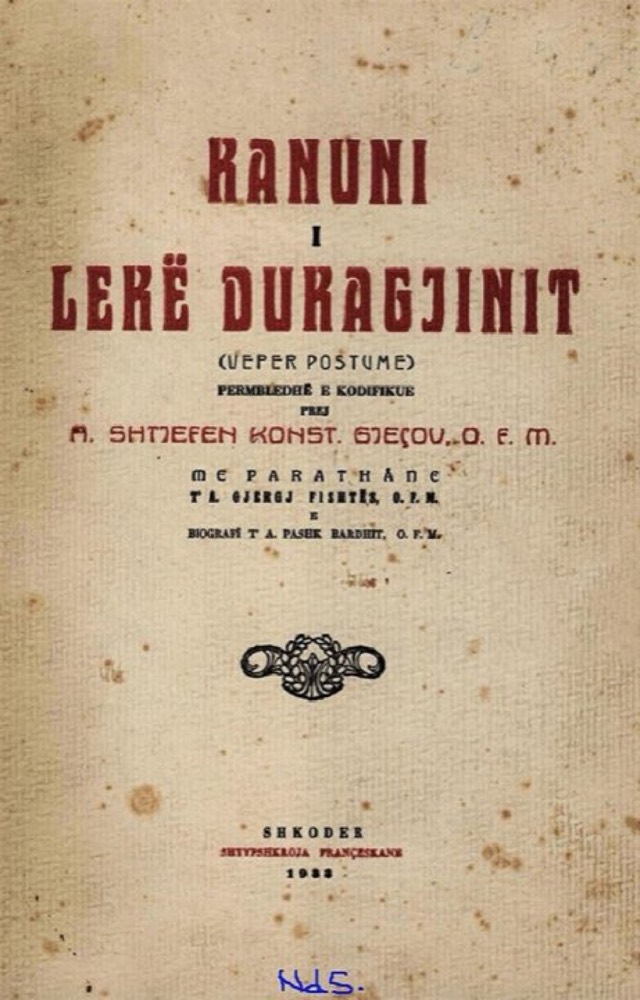
For centuries the northern highlands were governed not by any empire but by oral customary law, the Kanun, most famously the version attributed to Lekë Dukagjini. It codified property, marriage, hospitality, honour and blood feud in extraordinary detail, and it was memorised, not written, until Shtjefën Gjeçovi began recording it in the early 20th century.
Besa
At its centre is besa, a given word that cannot be broken. It obliged a host to defend a guest with his own life, even against his own kin. In 1943 that obligation was applied to Jewish refugees, and it is the reason Albania ended the war with more Jews than it began.
Blood feud
The same code produced gjakmarrja, blood feud, which locked families indoors for generations and shaped the architecture of the kulla tower-house. It resurfaced after 1991 when state authority collapsed. Both faces belong in this hall.
Burrneshat
The Kanun also produced the burrneshat, women who swore lifelong celibacy and lived as men, taking on a household's legal standing when there were no sons. A handful are still alive.
Research by ARBËR, the Living Museum of Albania. Published facts are verified or presented as open debate.