
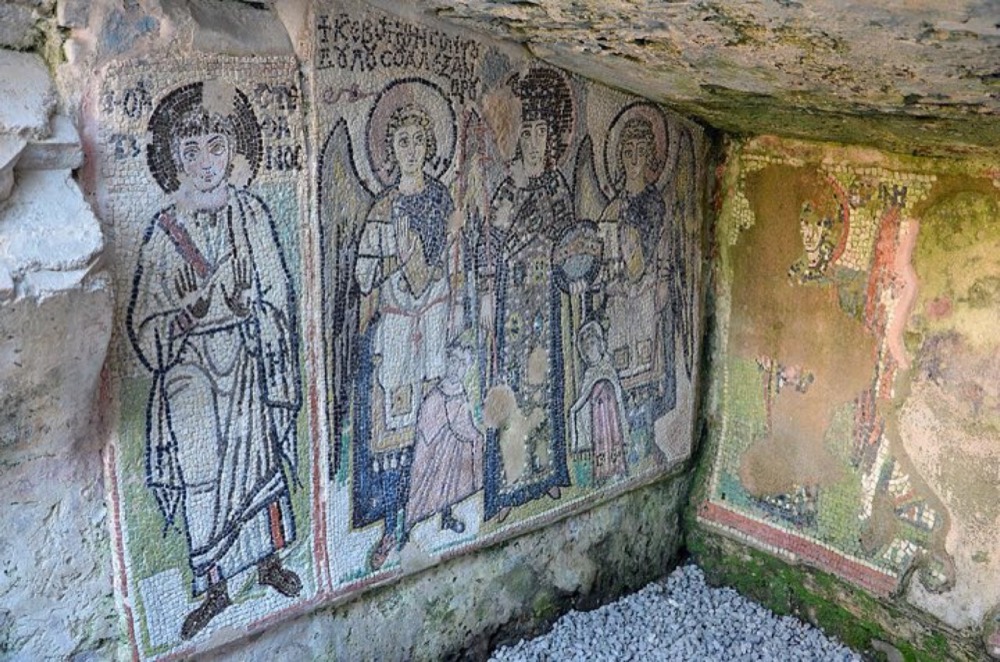
The Roman empire divides in 395 and the dividing line runs straight through this territory. It never stops being a frontier.
Christianity arrives early and takes deep root. The Codex Purpureus Beratinus, gospel text in silver ink on purple-dyed parchment, survives from the 6th century in Berat, one of a handful of purple codices of that age anywhere in the world.
Slavic, Bulgarian and Norman waves pass through over eight centuries. The population endures under a shifting set of masters, and the Latin/Greek seam along the Shkumbin river hardens into something that still shows: the Gheg to Tosk dialect line follows roughly the same course, and so does the later Catholic/Orthodox split.
Key points
| 395 | Division of the Roman empire; this land becomes the seam |
| 6th c. | Codex Purpureus Beratinus, UNESCO Memory of the World, 2005 |
| Shkumbin | The river that divides Latin from Greek, Gheg from Tosk |
| Pressure | Slavic, Bulgarian and Norman incursions across eight centuries |
Research by ARBËR, the Living Museum of Albania. Published facts are verified or presented as open debate.